Advertisement
Advertisement








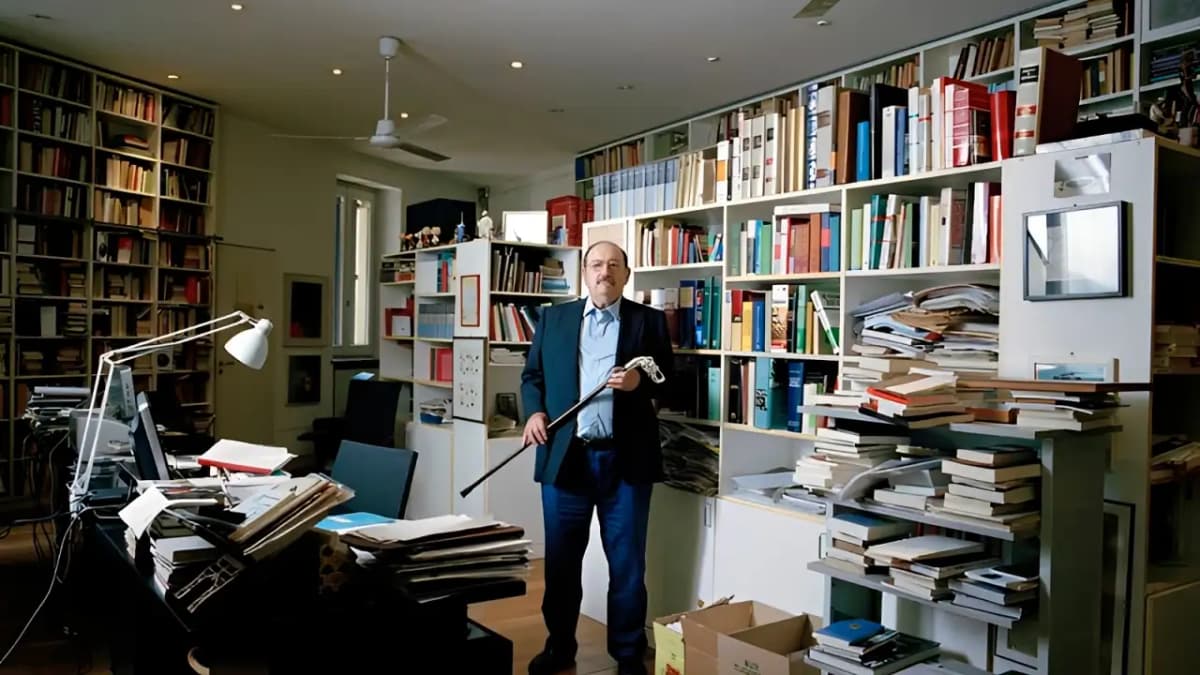
Visitors to the home of renowned author umberto eco often posed a familiar question that overlooked a deeper understanding of his extensive library, which boast
Visitors to the home of renowned author Umberto Eco often posed a familiar question that overlooked a deeper understanding of his extensive library, which boasted around thirty thousand volumes. They were curious about how many of those books he had actually read. Eco found this inquiry to be somewhat tiresome, as he believed that the unread books were, in fact, the essence of his collection. Many of us maintain a more modest version of such a library, perhaps a stack of books on our bedside table or a shelf filled with tomes whose opening pages we can barely remember. This phenomenon is frequently labeled as a personal shortcoming, but it raises the question of whether it should be perceived in that light at all. In Japanese culture, there exists a term for this particular habit: 'tsundoku,' which combines the words for piling up and leaving things for later with the act of reading. This term, which emerged during the Meiji era, was first noted in 1879 and was used in a somewhat teasing manner to describe a teacher whose shelves were laden with books he had never opened. The connotation of 'tsundoku' is one of affection rather than reproach, contrasting sharply with the English-speaking world's historical view of similar behavior as bibliomania, a condition that was once pathologized and treated as a disorder needing correction. Thus, one culture perceives a harmless quirk, while another regards it as a serious affliction.
Eco's defense of his extensive collection was rooted in practicality. He argued that a library filled with books one has completed serves as a record of past achievements, while a library of unread books is a more valuable asset, acting as a guide to future exploration. This concept was echoed by Nassim Nicholas Taleb in his 2007 work, 'The Black Swan,' where he introduced the term 'antilibrary.' Taleb posited that unread books hold greater worth than those that have been read, suggesting that a person’s collection should reflect the gaps in their knowledge rather than merely their accomplishments. This perspective transforms the towering stack of unread books from a source of shame into a daily reminder of the vast expanse of knowledge yet to be discovered, offering a unique form of humility that many individuals struggle to cultivate on their own.
The underlying psychology of this behavior is both straightforward and endearing. Acquiring a book typically takes just a minute and is often less expensive than a meal, while the act of reading demands a significant time commitment that many of us find elusive. Consequently, the decision to purchase a book is often made by an optimistic version of ourselves, envisioning a future where we have ample time to read, while the actual reading is left to our more fatigued present selves. Each book purchase represents a small bet on a more organized future. Additionally, we tend to buy books that align with our aspirations, such as understanding complex subjects like macroeconomics or delving into historical narratives, even before we feel ready to engage with them. The modern purchasing process has further reduced the barriers to acquiring books, allowing a midnight recommendation to quickly become a delivered parcel, while the time required for actual reading remains unchanged. It is also important to recognize that the dichotomy of read versus unread is overly simplistic. As Christopher Mims has pointed out, many works, including reference materials, essay collections, and biographies, are often browsed rather than read in their entirety, and this approach is perfectly valid. Therefore, the stack of books by your bedside should not be viewed as a burden; instead, the guilt associated with it is borrowed from a culture that insists curiosity must come with a completion certificate. Those unopened books represent everything that has piqued your interest, serving as a testament to a mind that is continuously seeking knowledge. So go ahead and purchase that next book; the collection was never intended to be a checklist but rather a reflection of your intellectual journey.
Telangana IT Minister Calls Karnataka a Healthy Competitor for Investments
Dehradun Woman Claims Rapido Driver Abandoned Her During Stormy Night
Kerala Plus Two SAY Results 2026 Now Available Online
Discover the Authentic Dip for Shawarma: It's Not Mayo, It's Toum
Oncologist Highlights Subtle Cancer Symptoms Often Ignored by Patients
Abhijeet Dipke Battles Typhoid: Recognizing Early Symptoms is Crucial
Abhijit Dipke Battles Typhoid: Key Symptoms to Recognize
Understanding the Impact of Blood Pressure Medications on Heart Rate
Choosing Between Washer Dryer Combos and Separate Dryers for Monsoon Laundry
Bengaluru Woman Questions If Rs 60,000 Rent Justifies Room View
Top 5 Zodiac Signs Set for Prosperity on July 25, 2026