









NEP Celebrates Six Years: Key Innovations in Education System
In 2020, the national education policy (nep) was launched by the ministry of education in india, aiming to transform the educational landscape of the nation. no
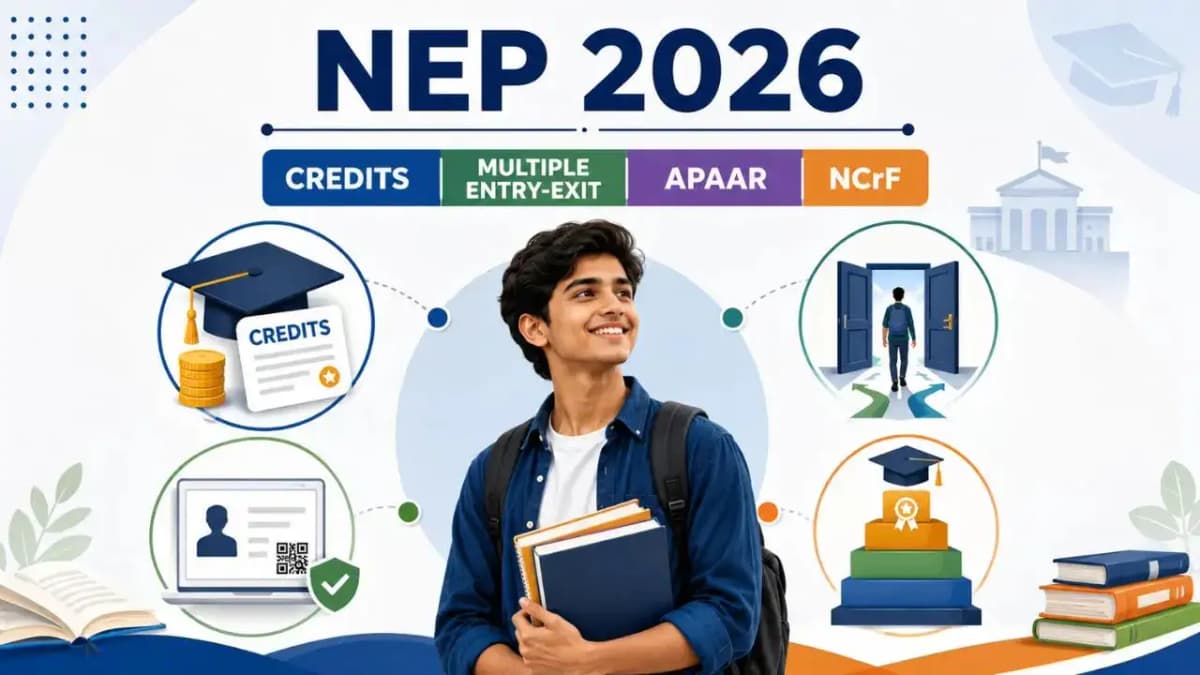
In 2020, the National Education Policy (NEP) was launched by the Ministry of Education in India, aiming to transform the educational landscape of the nation. Now, six years later, the NEP has initiated significant reforms that have reshaped the operations of educational institutions across the country. Among the notable advancements are the establishment of the Academic Bank of Credits (ABC), the implementation of a Multiple Entry-Exit system, the introduction of the APAAR ID, and the formulation of the National Credit Framework (NCrF). These initiatives have not only revolutionized how student data is managed and accessed but have also granted learners the flexibility to navigate their educational journeys at their own pace. As we commemorate the sixth anniversary of the NEP, it is essential to explore the practical implications of these initiatives introduced by the Ministry of Education.
The Academic Bank of Credits is designed to enhance the educational experience by providing a secure digital platform for students to store, manage, transfer, and redeem academic credits acquired from accredited institutions. This system is overseen by the University Grants Commission and aligns with the objectives of the NEP 2020 and the NCrF. It facilitates credit transfers, offers multiple entry and exit options, and recognizes learning across various disciplines and institutions. This framework allows students to temporarily pause their studies after completing a portion of their coursework. The credits they have earned can be preserved in the ABC database, enabling them to resume their education later and apply these credits towards their degree completion. Academic credits serve as a measurement unit for coursework, with one credit representing one hour of instructional time, two hours of practical work, or three hours of experiential learning weekly, as outlined by the National Credit Framework.