








Gaza's Healthcare System Faces Collapse Amid Ongoing Conflict
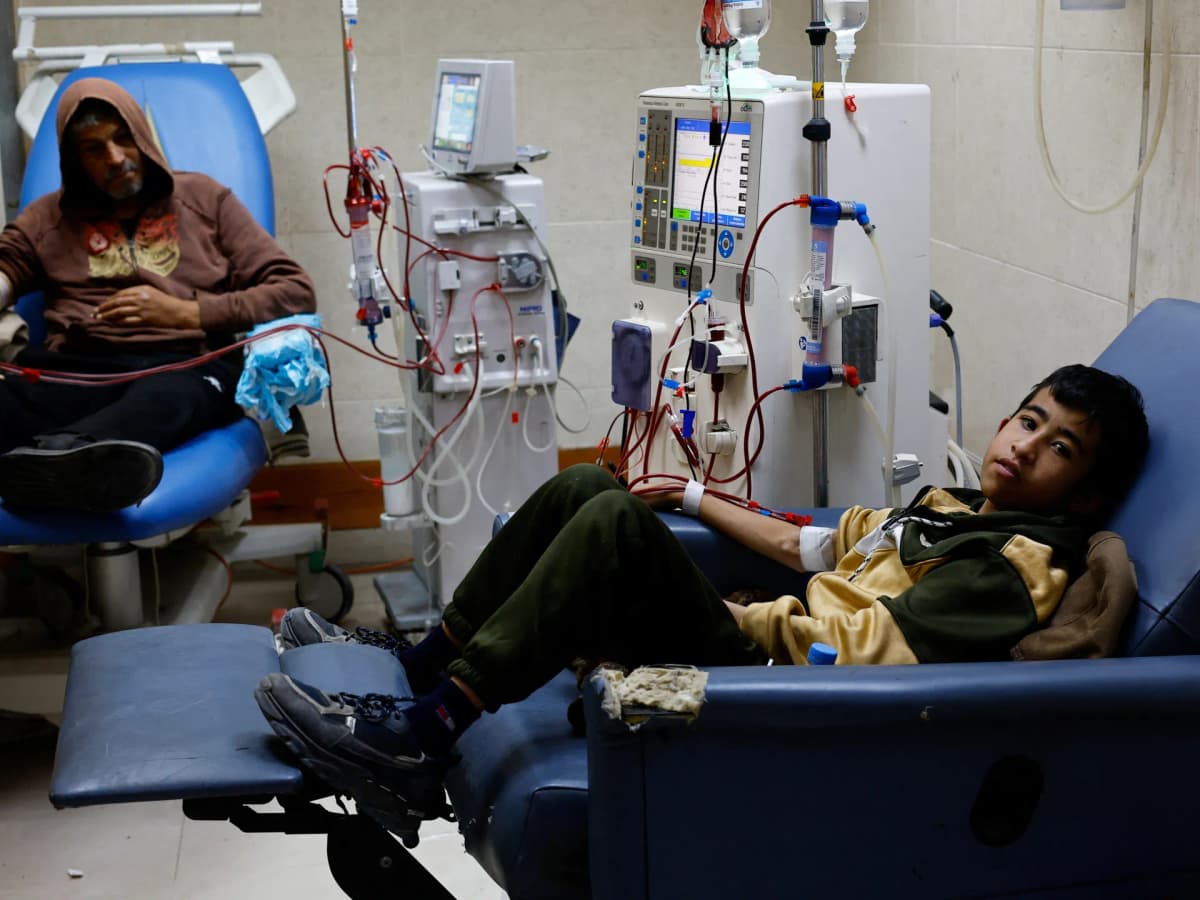
In the heart of gaza city, the al-shifa hospital's dialysis unit is a stark representation of the dire healthcare crisis unfolding in the region. each day, the
In the heart of Gaza City, the al-Shifa Hospital's dialysis unit is a stark representation of the dire healthcare crisis unfolding in the region. Each day, the same grim scene plays out as patients are lined up in a cramped space, connected to machines that are crucial for their survival. Among them is 14-year-old Ruwaa Muntasir Abdul Karim from Jabalia, whose frail frame highlights the severity of her condition. As she sits silently in her chair, her father, Muntasir, expresses the heart-wrenching reality of their situation. "My daughter used to walk and play before the illness. Her life changed after surgeries and dialysis," he shares, emphasizing the critical nature of her treatment. The ongoing conflict has devastated Gaza's medical infrastructure, leaving hospitals like al-Shifa struggling to provide necessary care amidst a crippling shortage of resources.
The Palestinian Ministry of Health reports that nearly half of the dialysis machines in Gaza are non-operational due to a lack of sodium bicarbonate, a vital component for their functioning. The number of hospitals capable of treating kidney failure has plummeted from seven to just four, with some facilities, including the Noura al-Kaabi Dialysis Centre, completely destroyed by military actions. As a result, the mortality rate among kidney failure patients has surged, with statistics indicating that the number of such patients has dropped from 1,200 to around 700, following the deaths of over 470 individuals who missed critical dialysis sessions. Osama Abu Rahma, who oversees the kidney department at Al-Aqsa Hospital, reveals that of the 51 dialysis machines at his facility, 25 are out of service, exacerbating the already overwhelming demand for treatment.