






Government Considers Disqualification to End Proxy Rule in Panchayats
For almost two decades, india has made significant strides in promoting women's participation in grassroots governance through political reservations in gram pa
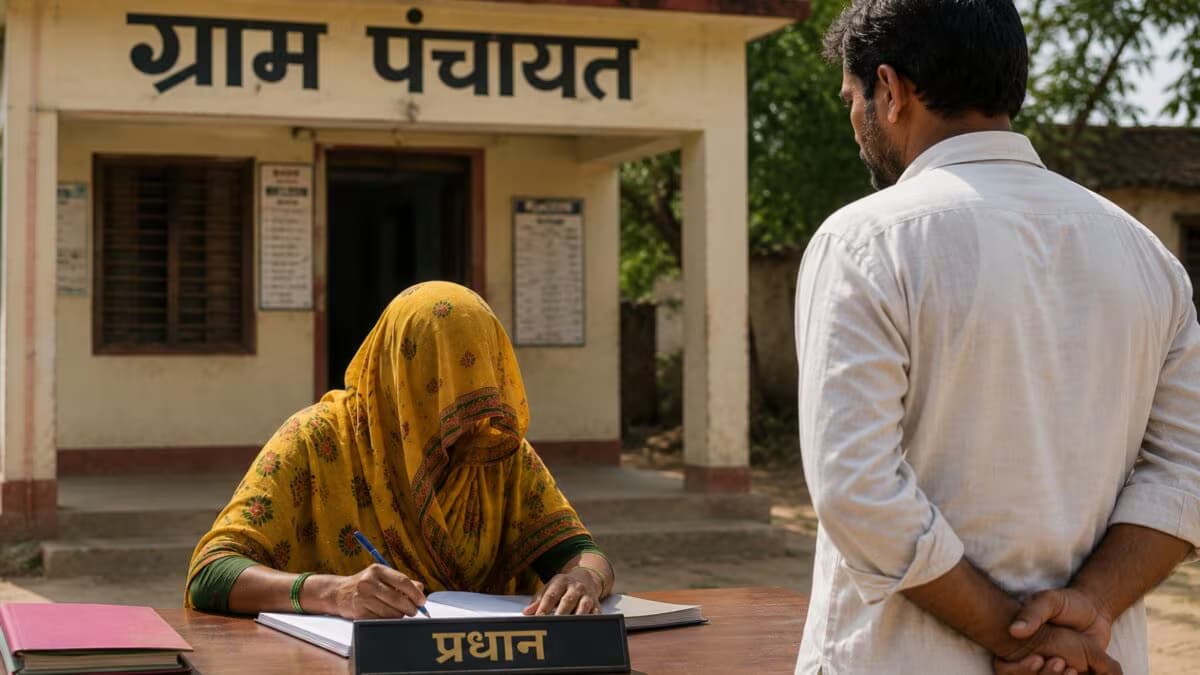
For almost two decades, India has made significant strides in promoting women's participation in grassroots governance through political reservations in gram panchayats. However, in numerous villages, the elected women often serve merely as symbolic figures, while the real power is wielded by others, predominantly their husbands. This phenomenon has led to the widespread use of the term 'Panchayat Pati', which refers to the practice of male relatives exercising authority on behalf of elected female representatives. Recently, this issue has garnered attention as a task force was established to address the recommendations of an advisory committee aimed at curbing proxy governance. The task force has submitted its findings to Union Panchayati Raj Minister Rajiv Ranjan Singh, commonly known as Lalan Singh, and is poised to initiate significant changes in the governance structure.
The report from the task force proposes a robust deterrent against proxy governance, suggesting that elected representatives could face disqualification if it is determined that they are not exercising their authority independently. This recommendation is particularly noteworthy as it seeks to address the underlying issue of proxy rule, which has persisted due to a culture of acceptance within institutions. The report emphasizes that any government official who condones or allows such practices will also be held accountable. A senior official involved in the task force highlighted that the recommendations aim to target not only the husbands and relatives who exert influence but also the bureaucrats who fail to act against these practices. This approach underscores the notion that proxy governance is not just a societal concern but also a significant administrative challenge.