




Sudanese Mothers Face Dual Crises Amid Ongoing Conflicts
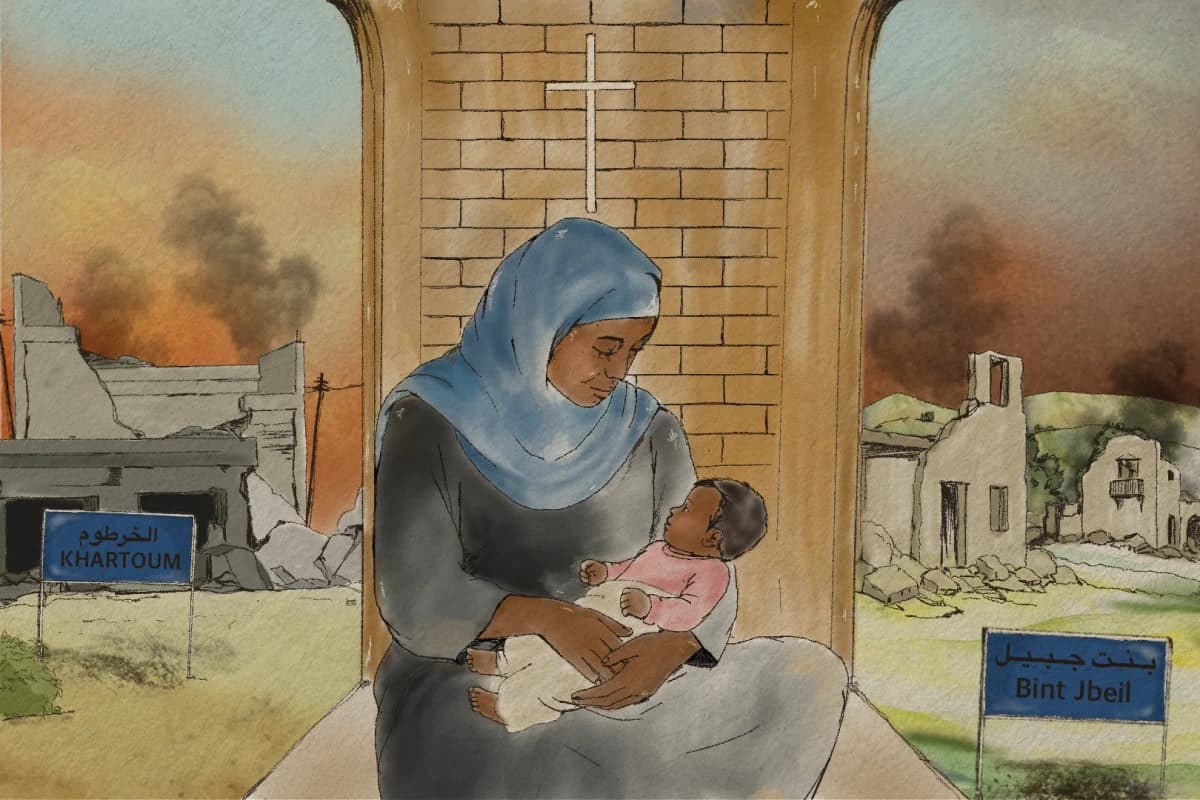
In the heart of beirut, rufaida, a 28-year-old sudanese mother, cradles her two-month-old son, ahmad, in a makeshift shelter at saint joseph church. the swelter
In the heart of Beirut, Rufaida, a 28-year-old Sudanese mother, cradles her two-month-old son, Ahmad, in a makeshift shelter at Saint Joseph Church. The sweltering afternoon sun casts a heavy heat over the courtyard, where clothes hang to dry and children play amidst scattered mattresses and laundry baskets. The atmosphere is filled with the sounds of laughter, mingling with the soft conversations of displaced families who have sought refuge from the turmoil of war. Rufaida, despite her exhaustion and the dark circles under her eyes from sleepless nights, finds solace in her baby’s presence. "Every time I am stressed, I look at the baby and he gives me some relief. I can forget about the war for a second," she shares, revealing the emotional toll of her circumstances. Having fled Sudan a year ago, she and her husband, Mohammad, 39, now share this temporary home with around 250 other displaced individuals, primarily from Sudan, alongside others from South Asia. Since the resurgence of conflict between Hezbollah and Israel on March 2, Lebanon has seen a staggering 1.5 million people displaced, many of whom are migrant workers like Rufaida and Mohammad.
Rufaida’s journey to Lebanon is marked by profound loss and resilience. The ongoing civil war in Sudan not only destroyed her family home but also claimed her father’s life, leaving her to rely on her uncle for support. It was through him that she met Mohammad, who had already been in Lebanon for eight years. Their relationship blossomed through countless phone calls and messages, despite the chaos engulfing Sudan. Rufaida had promised to complete her pharmaceutical studies at the University of Khartoum before joining Mohammad, but the journey to Lebanon proved to be fraught with challenges. Navigating a war-torn country, she spent three arduous months securing the necessary documents to leave. "My process was very difficult because of the war. I had to go to many cities to try and arrange my papers and my passport," she recounts, illustrating the perilous conditions she faced while traveling through regions controlled by militias. Eventually, she boarded a flight to Beirut, arriving on a tourist visa that has since expired, leaving her vulnerable to deportation if caught overstaying.