


Contrasting Responses: Sonam Wangchuk and Anna Hazare Hunger Strikes
In 2011, the congress-led united progressive alliance (upa) faced significant challenges when social activist anna hazare undertook a 15-day hunger strike deman
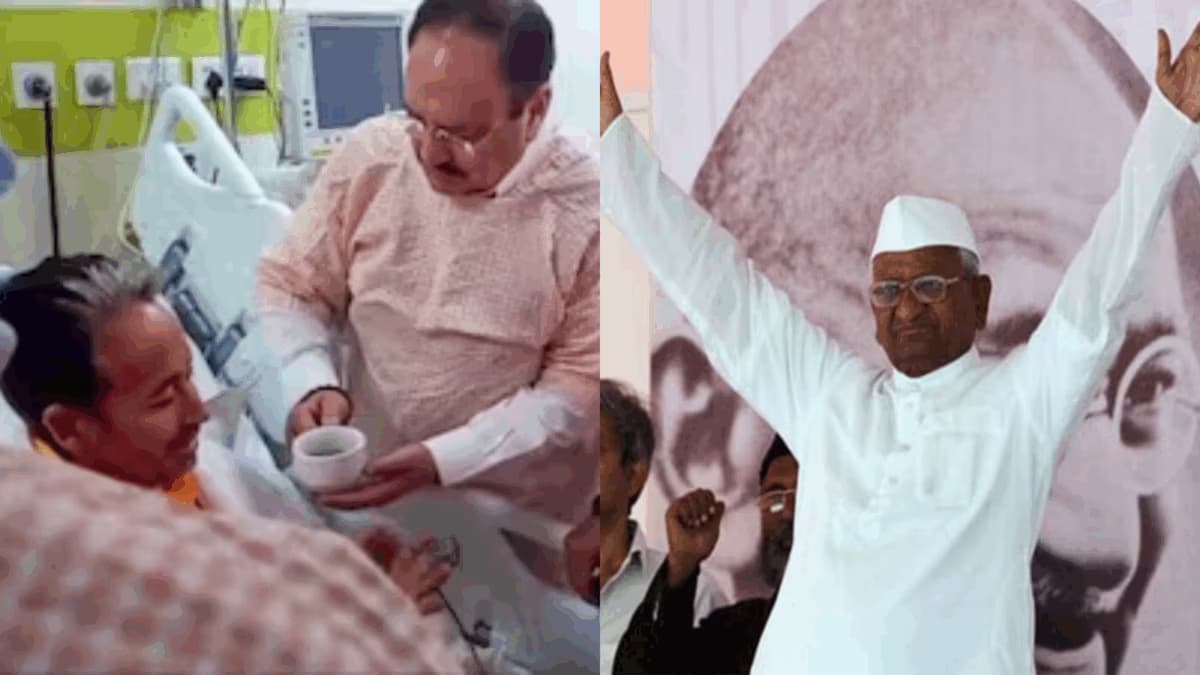
In 2011, the Congress-led United Progressive Alliance (UPA) faced significant challenges when social activist Anna Hazare undertook a 15-day hunger strike demanding the implementation of the Lokpal Bill. The moment Hazare accepted water from then-Minister Vilasrao Deshmukh, the government breathed a sigh of relief. However, the damage had already been done; the movement had severely undermined the administration's credibility. The UPA was perceived as weak and indecisive, a sentiment that many analysts believe played a crucial role in its loss during the 2014 Lok Sabha elections. The protests not only highlighted the government's vulnerabilities but also paved the way for the emergence of the Aam Aadmi Party, which positioned itself as a formidable political force against the Congress.
Fast forward to 2026, and the circumstances surrounding Sonam Wangchuk's hunger strike reveal a stark contrast in governmental response. At Medanta Hospital, Union Ministers JP Nadda and Jitendra Singh provided Wangchuk with juice as he concluded his protest. Unlike the UPA's frantic and defensive stance in 2011, the current government displayed a more composed demeanor, aware of the political implications and the rising student activism. The differences in approach between the two administrations are evident, particularly in how they managed the respective crises. The UPA's visible uncertainty was marked by senior ministers scrambling to negotiate with the India Against Corruption (IAC) movement, which included prominent figures like Arvind Kejriwal and Baba Ramdev. The optics of ministers rushing to the airport to meet the IAC delegation only reinforced the perception of a government under siege.